Follow MuriPhys on LinkedInDurham, North Carolina, USA919.341.5445
MuriPhysTalk to a scientist

CNS drug delivery CRO · Durham, NC

Robotic stereotaxic
CNS drug delivery.

Hands-on surgical experience, robotic stereotaxic positioning and brain microdissection. Connect the delivery with meaningful regional and functional readouts.

Experienced surgical teamRegional tissue analysisIntegrated study endpoints
Research at MuriPhysExplore the evidence
StriatumCerebellumCisterna magna
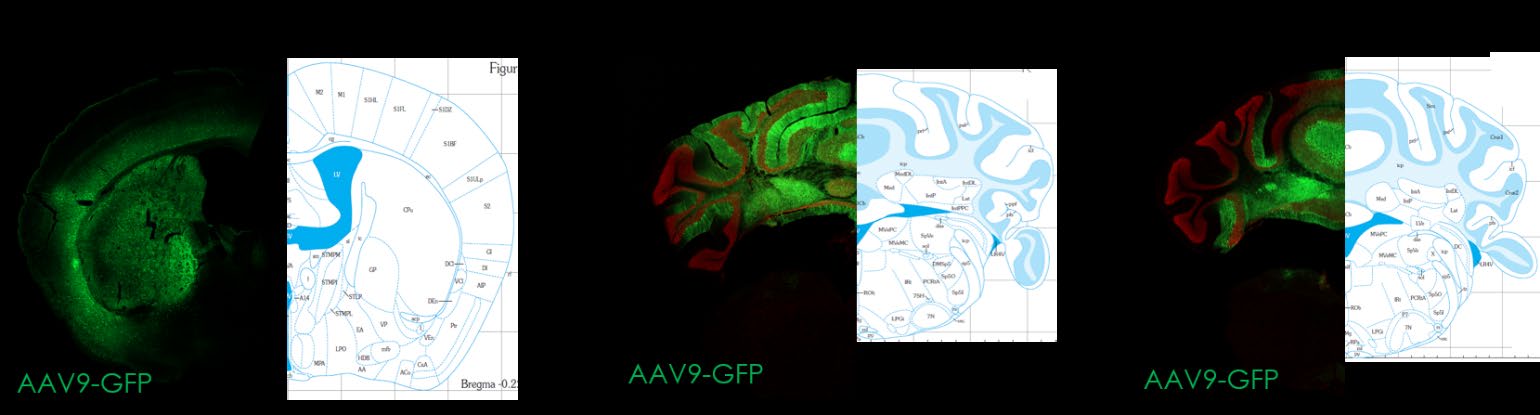
Actual MuriPhys AAV9-GFP distribution examples after striatal, cerebellar and cisterna magna delivery
What should I look for in these images?

These representative AAV9-GFP distribution and expression images connect a delivery route with anatomical regions and tissue readouts. Review the original experiment, route and collection context in the white paper when comparing them with your research question.

Read the experimental context ↗
Representative AAV9-GFP distribution images. See our CNS white paper for the experimental context.
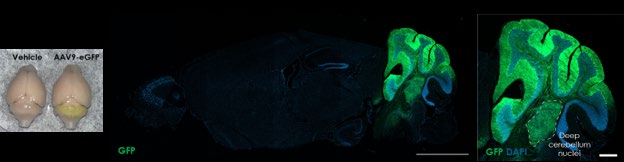
MuriPhys research images showing cerebellar GFP expression after direct cerebellar AAV9-CAG-GFP injection
Regional expression, shown in our CNS delivery white paper.

Technology supported by surgical experience

A stereotaxic drug delivery CRO with hands-on CNS expertise.

MuriPhys provides preclinical CNS drug delivery services for research and therapeutic development programs. Our scientists bring experience in rodent surgery, neurobiology and therapeutic development to the design and execution of each study.

Neurostar robotic stereotaxic apparatus

We use Neurostar robotics for computer-controlled stereotaxic positioning during targeted CNS delivery. The apparatus supports precise instrument positioning and a consistent approach to coordinate-guided work. Experienced surgical execution, anatomical planning and study-specific targeting checks remain central to the quality of the experiment.

Robotic stereotaxy is also described as robot-assisted stereotactic surgery or stereotaxic injection. We plan the delivery method around the animal model, therapeutic modality, anatomical target and intended interpretation of the data.

From the first discussion to the final readout

  • Align the route and target with the biological question.
  • Agree on study controls, targeting checks and success criteria.
  • Coordinate surgery, in-life observations and sample collection.
  • Plan brain microdissection and downstream assays together.
  • Keep the sponsor involved through direct scientific communication.

Learn about Neurostar’s robotic stereotaxic technology.

Read our CSO's Neurostar announcement
Share the science.
Share on LinkedInFollow MuriPhys

CNS delivery routes & methods

Match the route to the question.

Delivery into brain tissue and delivery into cerebrospinal fluid address different research objectives. Route selection and the surgical method are planned for the individual study.

Route / methodDelivery compartmentResearch focus
Intraparenchymal delivery (IPa)Delivery into a defined brain region.Region-specific delivery studies, including stereotaxic AAV and other therapeutic administration.
Intracerebroventricular delivery (ICV)Delivery into a cerebral ventricle.Studies using ventricular access to the cerebrospinal fluid compartment.
Intrathecal delivery (IT)Delivery into the intrathecal cerebrospinal fluid compartment.Spinal and CNS-directed therapeutic studies.
Intracisterna magna delivery (ICM)Delivery through the cisterna magna cerebrospinal fluid compartment.CNS biodistribution and therapeutic-delivery research.
Convection-enhanced delivery (CED)Infusion-based delivery into brain tissue.Studies of therapeutic distribution within targeted brain tissue.

Intraparenchymal delivery (IPa)

Delivery into a defined brain region. Region-specific delivery studies, including stereotaxic AAV and other therapeutic administration.

Plan the readout: Target anatomy, regional exposure or expression, and the tissue or functional readouts needed to answer the study question.

Intracerebroventricular delivery (ICV)

Delivery into a cerebral ventricle. Studies using ventricular access to the cerebrospinal fluid compartment.

Plan the readout: Distribution, target engagement and endpoints across the CNS regions relevant to the program.

Intrathecal delivery (IT)

Delivery into the intrathecal cerebrospinal fluid compartment. Spinal and CNS-directed therapeutic studies.

Plan the readout: The intended site of action, exposure, tolerability and study-specific molecular or functional endpoints.

Intracisterna magna delivery (ICM)

Delivery through the cisterna magna cerebrospinal fluid compartment. CNS biodistribution and therapeutic-delivery research.

Plan the readout: Distribution across the regions of interest and alignment with tissue collection and analysis.

Convection-enhanced delivery (CED)

Infusion-based delivery into brain tissue. Studies of therapeutic distribution within targeted brain tissue.

Plan the readout: Delivery objectives, distribution assessment and tissue or functional endpoints within the agreed study design.

Other CNS delivery study designs

Discuss cannula implantation, osmotic-pump studies or systemic administration when they fit the program. We also support studies of AAV and other gene-delivery platforms, ASOs, siRNAs, small molecules, biologics, nanoparticles and cellular therapies. Route, material handling, readiness work and endpoints are agreed for the specific test article.

Brain microdissection services

The right brain region.
A more focused tissue question.

Our brain microdissection techniques connect anatomically defined tissue collection with the CNS delivery plan.

A whole-brain sample may not answer a region-specific question. Planning regional tissue collection alongside delivery helps align the samples with the intended target and the biological effect being studied.

We work with your team to define the regions of interest, comparison tissues, specimen identity and the downstream analysis. Collection and preservation requirements are set around the assays that will use the tissue.

Connect delivery with tissue analysis

  • Regional exposure, biodistribution or expression questions.
  • PCR-based molecular analyses and suitable protein assays, including ELISA.
  • Histology or immunohistochemistry in appropriately prepared tissue.
  • Interpretation alongside behavioral or electrophysiological findings.

Different analyses can require different tissue preparation. We plan the sample allocation before the study so that the delivery, dissection and assay requirements work together.

Explore in vitro and tissue assays or discuss coordinated bioanalysis.

CNS models & functional endpoints

Keep the model, delivery and outcome connected.

The disease model and its phenotype inform the delivery strategy, observation schedule and endpoints. Our experience spans neurodegenerative and neurodevelopmental research.

Robot-guided traumatic brain injury (TBI) models

Our CNS capability showcase also describes Neurostar-based targeting for TBI model studies, connected with treatment administration, longitudinal behavioral assessment and downstream functional endpoints.

From the MuriPhys capability showcase

Connect the delivery with the response.

Plan neurological function, regional tissue findings and analytical endpoints as parts of the same study.

Behavior & gait

Noldus CatWalk, BlackBox One, rotarod and other study-specific assessments connect dosing with locomotion, coordination, pain-related behavior and neurological function.

Explore behavioral assessments

Wireless electrophysiology

EEG, EMG and tremor readouts can be synchronized with observations in freely moving rodents. Recording conditions, signal quality and analysis are defined for the project.

Explore electrophysiology

Molecular & tissue analysis

Connect regional collection with immunohistochemistry, immunofluorescence, PCR or ddPCR. Discuss single-cell spatial readouts when anatomical context is central to the hypothesis.

Explore tissue assays

Exposure & bioanalysis

Coordinate plasma, CSF and tissue sampling with suitable bioanalytical methods. The MuriPhys–Qmera collaboration connects in vivo execution with specialist LC-MS capabilities.

Explore bioanalysis coordination

Evidence from MuriPhys research

Explore the CNS delivery white paper.

Representative distribution and expression images provide concrete examples of our CNS work. The white paper gives the experimental context.

Striatum · IPaCerebellum · IPaCisterna magna
Representative AAV9-GFP distribution images alongside brain-atlas illustrations for striatal, cerebellar and cisterna magna delivery
Representative AAV9-eGFP distribution examples from the MuriPhys CNS delivery white paper. See the white paper for the experimental context.
Representative GFP expression in cerebellar tissue after direct cerebellar AAV9-CAG-GFP injection, from the MuriPhys CNS delivery white paper
The white paper also reports cerebellar GFP expression following direct cerebellar AAV9-CAG-GFP injection in FVB mice. Interpret these representative images within the experiments described in the source.

Connect CNS expertise with responsible model selection.

Human cell models and suitable NAMs can inform the questions taken into an animal study. Where in vivo work is justified, we connect delivery, functional assessments and tissue readouts, guided by Replacement, Reduction and Refinement.

Our approach to NAMs and the 3Rs

Questions about CNS delivery services.

Does MuriPhys provide robotic stereotaxic surgery services?

Yes. MuriPhys uses a Neurostar robotic stereotaxic apparatus for coordinate-guided CNS drug delivery in rodent studies. The surgical approach, target anatomy and study quality checks are agreed for the project.

Which CNS drug delivery routes can I discuss with MuriPhys?

Intraparenchymal (IPa), intracerebroventricular (ICV), intrathecal (IT) and intracisterna magna (ICM) delivery, plus convection-enhanced delivery (CED). We also discuss cannula or osmotic-pump studies and systemic administration as appropriate to the research plan.

What does brain microdissection add to a CNS study?

Brain microdissection allows anatomically defined regions to be collected for planned tissue analyses. This can help connect regional exposure, expression or target engagement with the delivery strategy and functional findings.

Can stereotaxic delivery be combined with behavioral and molecular endpoints?

Yes. We can plan delivery alongside in-life observations, behavioral assessments, electrophysiology, tissue collection and suitable laboratory assays. Methods and sample requirements are defined together before the work starts.

How do I choose the best CNS drug delivery CRO for my study?

Look for experience with your model and route, appropriate surgical equipment, a clear targeting and quality-control plan, compatible tissue methods and direct scientific communication. Ask how the proposed delivery, sampling and analysis will address your specific hypothesis.

Can MuriPhys support a CNS-focused SBIR or STTR submission?

Yes. We can contribute a study-specific scope, timeline, budget inputs, facility description and vendor-support materials, and connect the proposed CNS work with the resources needed for execution.

Additional CNS delivery background & therapeutic platforms

Effective drug delivery is a cornerstone of preclinical research across multiple modalities, serving as the crucial link between emerging therapeutic candidates and potential clinical applications. MuriPhys harnesses specialized technology, proprietary techniques, and extensive experience in preclinical development to deliver exceptional precision and quality. By prioritizing robust methodologies and reproducible outcomes, MuriPhys supports each study saves its partners valuable time and resources, speeding the path from discovery to successful clinical translation.

MuriPhys supports multiple CNS delivery routes for rodent preclinical studies, allowing sponsors to match the route of administration to the therapeutic modality, target anatomy, and study objective.

Service Route / Method Typical Use
Intracerebroventricular administration ICV Broad CNS exposure through cerebrospinal fluid access
Intraparenchymal administration IPa Region-specific brain delivery for localized target engagement
Intrathecal administration IT Spinal cord and cerebrospinal fluid delivery
Intracisterna magna administration ICM CNS-wide cerebrospinal fluid access
Stereotaxic injection Brain-region targeting Targeted delivery of AAVs, ASOs, siRNAs, biologics, nanoparticles, or cells
Systemic CNS program support IV, IP, SC, PO, and related routes PK/PD, tolerability, biodistribution, and efficacy studies for CNS-directed therapeutics

MuriPhys excels at tailoring preclinical drug delivery strategies to meet diverse sponsor needs, whether it’s viral-based gene therapy or cell transplant therapies. By combining specialized technologies, deep scientific expertise, and flexible operational protocols, MuriPhys supports each program benefits from meticulously customized methods. Below are some key product and delivery platforms that define MuriPhys’ comprehensive capabilities:

Drug Products

  • Therapeutic Modalities (Gene Therapy, Gene Editing, ASOs, siRNAs) - MuriPhys provides precise, targeted delivery for a range of therapeutic modalities. Our team has extensive hands-on experience with vector engineering, dose optimization, and tissue-specific administration, supporting the highest possible efficacy and safety profiles for gene therapy and editing applications. Proprietary formulations and rigorous quality checks further enhance the reliability of ASOs and siRNAs in preclinical studies.
  • Small Molecules / Biologics - For traditional small molecule compounds and complex biologics, MuriPhys leverages advanced delivery techniques and detailed pharmacokinetic assessments. Our robust protocols maximize bioavailability and therapeutic impact while maintaining strict control over dosing schedules. This disciplined approach helps sponsors swiftly generate meaningful, reproducible data.
  • Nanoparticles - MuriPhys offers specialized expertise in nanoparticle-based delivery systems, including liposomes, polymeric carriers, and lipid nanoparticles (LNPs).
  • Monoclonal Antibodies (mAbs) - Leveraging decades of combined immunology and preclinical research experience, MuriPhys refines administration protocols for monoclonal antibodies to improve binding, distribution, and therapeutic window. We emphasize assay development, immune response profiling, and PK/PD correlation, delivering actionable data that can inform both safety and efficacy endpoints.
  • Cell Transplants - Our dedicated cell biology team guides sponsors through every stage of cellular therapy programs, including donor cell sourcing, expansion, and transplantation. Meticulous handling and defined SOPs for injection routes and follow-up testing reduce variability, supporting each cell transplant study yields reliable, translational results.

By seamlessly integrating these platforms into a single preclinical framework, MuriPhys delivers consistent, high-quality data that shortens development timelines and reduces costs. Our commitment to rigorous research standards, flexible study designs, and transparent communication empowers sponsors to navigate the drug development pathway with confidence and efficiency.


Learn more about some of the CNS disorders we specialize in

Download our white paper

A CNS target. A delivery challenge. Let’s talk.

Discuss your model, therapeutic modality, target region, tissue endpoints and timeline with our scientists.

Discuss your project