


Keep the work moving.
Define a feasible schedule early. Coordinate study setup, in-life work, sample analysis and reporting. Raise questions promptly so the next decision does not wait for the end of the study.
About MuriPhys
Preclinical research built around your scientific objectives, time and budget, with personal attention from the first conversation through study reporting.
Our approach to NAMs and the 3RsScience with your priorities in mind
Our mission
Advance therapeutic discovery through translational science, with reliable data and a practical path from the research question to the next decision.
MuriPhys is an independent, U.S.-based preclinical contract research organization in Durham, North Carolina, with no foreign ties. We bring study design, in vitro assays, in vivo and in-life rodent studies, and scientific reporting into one coordinated research plan.
We work with research and drug development teams who need experienced scientists and the capacity to move their programs forward. You can bring us an early hypothesis, a focused experiment or an ongoing development program. We help define the question, choose relevant methods and endpoints, and plan the work around the decisions you need to make.
Your scientific objectives, timeline and budget shape the work. Our approach combines responsive communication, a clear scope and direct access to the people doing the science. We discuss feasibility, timing and cost early, keep you involved during the study, and explain what the data can support.
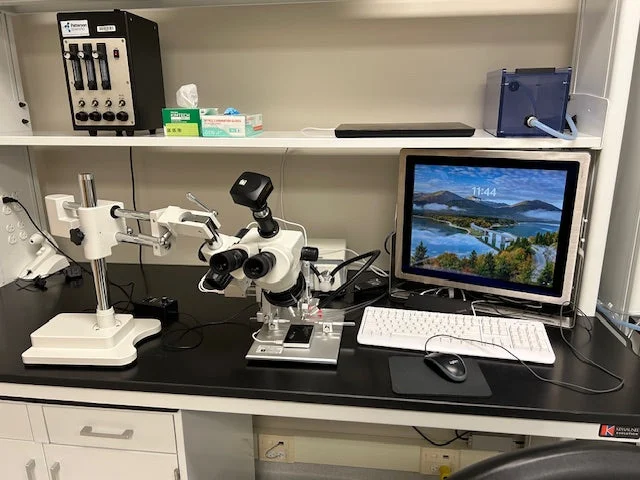
Our capabilities connect human iPSC-derived models, cell culture, ELISA, PCR, immunohistochemistry and other study-specific laboratory assays with animal research, CNS and systemic delivery, behavioral assessments, electrophysiology, sample collection and coordinated bioanalysis. We are working to integrate new approach methodologies (NAMs) with appropriate animal models, with a goal of reducing animal use and improving the relevance of the evidence. MuriPhys adheres to the 3Rs: Replacement, Reduction and Refinement. That continuity helps teams plan related work together and make better use of each study. A core strength is precise CNS drug delivery with our Neurostar robotic stereotaxic apparatus, supported by surgical experience and brain microdissection techniques. Explore our robotic CNS delivery capability.
We can also participate as a research partner in SBIR/STTR, CDMRP and other research grant programs, contributing study plans, budgets, timelines, facility descriptions and supporting materials. After an award, that planning can carry into study execution. For university collaborators, we offer a responsive extension of the laboratory and work hard to match core pricing for comparable work, where feasible.
Talk through your next milestoneDefine a feasible schedule early. Coordinate study setup, in-life work, sample analysis and reporting. Raise questions promptly so the next decision does not wait for the end of the study.
Build the scope around the scientific question. Agree on methods, deliverables and pricing before work begins, with a study plan that reflects your available resources and next milestone.
Speak directly with scientists who understand your project. Stay involved through study discussions and in-study updates, with a clear route for questions and decisions.
Connect early planning, preliminary data and research grant support with the facilities and people needed to perform the work. Build research capacity as your program develops.
Explore startup supportOur guiding principles
Four principles guide our scientific decisions, daily operations and relationships.
Design experiments around a clear hypothesis and useful endpoints. Connect methods, study execution and interpretation so each project contributes evidence for the next development decision.
Support reproducible research through documented procedures, trained personnel, careful animal care and organized study records. Apply Replacement, Reduction and Refinement in animal work. Plan handoffs and communicate changes throughout the work.
Build a respectful environment for the people behind the science. Support training, thoughtful workloads, open communication and attention to the demands of laboratory and animal-care work.
Understand the sponsor’s objectives, budget and timeline. Be clear about scope and feasibility, keep commitments visible, and discuss scientific questions and study issues directly.
We are working to integrate new approach methodologies (NAMs), human cell models and appropriate animal studies. Our aim is to replace or reduce animal use where scientifically appropriate, guided by the 3Rs.
Our approach to NAMs and the 3RsAnimal care & research standards
MuriPhys announced its AAALAC accreditation on March 14, 2025. The Council on Accreditation commended the team and identified specific strengths across the animal care and use program.

“The Council commends you and the staff for providing and maintaining an excellent program of laboratory animal care and use.”
Knowledgeable leadership and institutional support for facilities, caging and scientific equipment.
Veterinary care, healthy animals and a dedicated rodent environmental enrichment program.
Documented training for IACUC, animal-care and research staff, with a dedicated nonaffiliated IACUC member.
Comprehensive company standards and SOPs, with electronic tracking of animal census, health, husbandry and protocols.
Cage-side records for surgery and anesthetic and analgesic dosing.
Attention to compassion fatigue and personnel stress management.
These are the strengths highlighted in the Council’s commendation. Read the full statement.
Research Triangle Park · Durham, NC
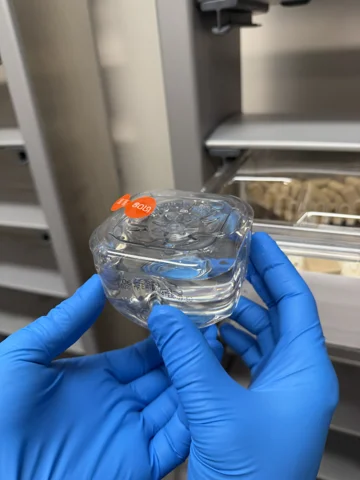
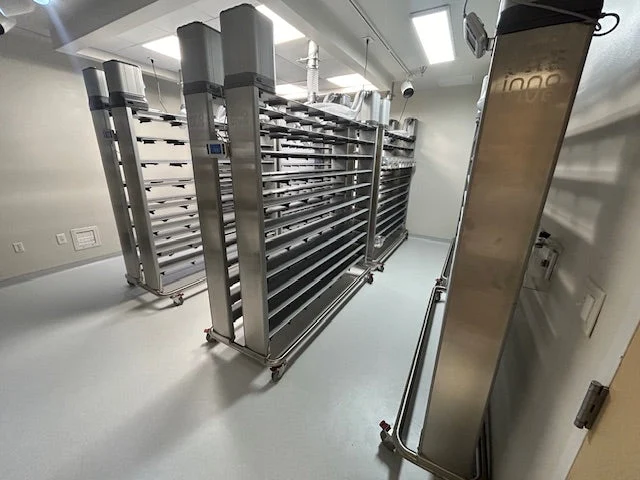
A rodent vivarium with capacity for more than 1,000 mouse and rat cages, alongside CNS delivery, functional assessments and sample collection.
Direct access to experience
Co-founder & Chief Executive Officer
An attorney and entrepreneur with more than 25 years of corporate-law experience. Mikhael leads the business and operational side of MuriPhys, with a focus on responsive service and practical partnerships.
Co-founder & Chief Scientific Officer
A preclinical neuroscience leader with more than 15 years of experience in rodent drug development. His experience includes establishing in vivo research capabilities at LifeEdit Therapeutics and advancing CNS programs.
Director of Science & Technology Alliances
A translational scientist with experience in gene therapy, ophthalmology, CNS and rare disease programs, including scientific leadership roles at Kriya Therapeutics and StrideBio.
Scientific directors
Director, iPSC and Cell Culturing
A stem-cell and neurobiology researcher with published work on human iPSC-derived neural systems, astrocytes, motor-neuron biology, oxidative stress and neurotoxicity. Anastasya leads our iPSC and cell-culturing capability.
Explore iPSC & cell cultureDirector of Oncology
A physician-scientist with more than 20 years of translational research experience across oncology, liver disease, gene therapy and therapeutic development. His work includes cancer models, tumor biology, nanoparticle delivery and preclinical efficacy studies.
Explore oncology researchAAALAC-accredited animal care and use program, IACUC oversight, veterinary care, training and documented procedures. We adhere to Replacement, Reduction and Refinement.
Controlled substances and radioactive materials licenses, rodent vivarium resources, stereotaxic delivery and functional assessment capabilities.
Founder & CEO
Mikhael Vitenson, the Co-Founder and CEO of MuriPhys, brings over 25 years of extensive experience in corporate law, having worked with several prominent law firms and multinational corporations. Mikhael shares a passion for a greener, more sustainable planet and dedicated the bulk of his career to environmental sustainability and renewable energy. In addition to his legal career, Mikhael has successfully established and managed numerous businesses across diverse industries, including food, real estate, and pet grooming. His multifaceted background combines legal acumen, passion for sustainability and entrepreneurial insight, driving MuriPhys forward in its mission to deliver quality and operational excellence in the preclinical research landscape.
Founder & CSO
Ariel Vitenzon, PhD, is the Co-Founder and Chief Scientific Officer at MuriPhys LLC. Prior to establishing MuriPhys, Dr. Vitenzon held a significant role at LifeEdit Therapeutics, an Elevatebio portfolio company. There, he was instrumental in setting up a specialized facility for conducting in vivo CNS and systemic studies, and led numerous CNS-related projects. Notably, through his adept cross-functional collaboration with the LifeEdit Therapeutics and Elevatebio teams, Dr. Vitenzon propelled the company's Huntington's disease program from its nascent stages to preclinical NHP studies within a remarkable timeframe of under two years.
With over 15 years of hands-on experience in in vivo preclinical drug development using rodent models, Dr. Vitenzon stands as a distinguished figure in his field.
Dr. Vitenzon's scholarly contributions include several papers published in peer-reviewed journals, underscoring his commitment to advancing scientific knowledge and therapeutic practices. Through MuriPhys LLC, Dr. Vitenzon continues to drive forward the frontiers of preclinical research, aiming to deliver tangible advancements for the future of therapeutic interventions.
Director of Science & Technology Alliances
Ruth Castellanos Rivera, PhD, serves as Director of Science & Technology Alliances at MuriPhys, where she leads strategic scientific collaborations and partnerships that accelerate innovation in advanced therapeutic technologies. With more than a decade of experience in gene therapy and translational research, Ruth brings deep expertise in bridging specialized discovery with real-world clinical development.
Prior to joining MuriPhys, Ruth held scientific leadership roles at leading biotechnology companies including Kriya Therapeutics and StrideBio, where she helped advance multiple gene therapy programs across ophthalmology, CNS, cardiac, and rare disease indications. At Kriya, she directed translational development for ophthalmology programs, successfully advancing one gene therapy candidate toward clinical evaluation while progressing another through preclinical development. Her work involved coordinating cross-functional teams and external partners, including academic institutions, CROs, and biotech collaborators, to achieve key milestones in candidate selection and therapeutic strategy.
Throughout her career, Ruth has been recognized for her ability to connect discovery science with translational development, building collaborative ecosystems that move innovative therapies toward patients. At MuriPhys, she focuses on cultivating strategic partnerships that expand the company’s scientific capabilities and accelerate the development of next-generation therapeutic solutions.
Dr. Kamran Khodakhah, PhD, serves as the Chair of the Scientific Board at MuriPhys LLC, bringing an extensive and distinguished background in neuroscience. He is a prominent professor in the Dominick P. Purpura Department of Neuroscience, as well as in the departments of psychiatry and behavioral sciences, and the Saul R. Korey Department of Neurology at Albert Einstein College of Medicine. Additionally, he held the prestigious Florence and Irving Rubinstein Chair in Neuroscience. Dr. Khodakhah's contributions to the field are well-documented, with more than 50 papers published in peer-reviewed journals. His groundbreaking research continues to shape the landscape of neuroscience and offers promising directions for understanding and treating a wide array of disorders. His leadership and vision at MuriPhys further reinforce the company's commitment to advancing scientific discovery and therapeutic innovation.
Dr. Zaven Kaprielian is a distinguished scientist and leader with a diverse and accomplished career spanning academia, industry, and venture capital. Dr. Kaprielian has made significant contributions to neuroscience research and therapeutic development, particularly in the areas of neurodegenerative disorders and neuropathic pain. Dr. Kaprielian served as Chief Scientific Officer at Remix Therapeutics, President & Board Member at Endlyz Therapeutics and a Venture Partner at Dementia Discovery Fund. From June 2013 to June 2018, Dr. Kaprielian was a Director of Neuroscience Research at Amgen in Cambridge, MA. In this role, he managed several teams and programs tasked with identifying novel therapeutics for neuropathic pain and neurodegenerative disorders, with a focus on ALS and Parkinson's Disease.
Dr. Heather Snell is a distinguished researcher whose wide-ranging expertise in biochemistry, pharmacology, and neuroscience has positioned her as a leading figure in her field. She focused on investigating the interactions of the GABAA ρ1 receptor with guanidine compounds, drugs known to block acid-sensing ion channels (ASICs). In January 2024, Dr. Snell established her own research program in the Neuroscience department at Yale School of Medicine as a Tenure-Track Assistant Professor. Her work at Yale represents a significant branching off from her earlier research in the cerebellum, where she continues to explore novel avenues in neurophysiology and pharmacology.
Dr. Abrahams is a neuroscientist, geneticist, and drug hunter with experience developing therapeutics and building startups. He is the founder and President of Heppinn Biosciences, a consultancy practice launched to support venture investors and biotech companies diligence opportunities, develop drugs, and operationalize programs. He’s also an Advisory Board Member for Autism Speaks, CureShank, FAST, the POGZ Foundation and Accelerator Life Science Partners.
Dr. Roy Sillitoe is an eminent neuroscientist whose research has significantly advanced our understanding of the biological bases underlying pediatric neurological diseases. With an impressive academic background and extensive postdoctoral training, Dr. Sillitoe's work has illuminated the complex neural circuitry required for proper brain function and its disruption in various neurological disorders.
Anastasya Birger, Ph.D., is Director, iPSC and Cell Culturing at MuriPhys. Her research background includes human stem-cell-derived neural models and cellular mechanisms of neurodegeneration. Her published work examines human iPSC-derived astrocytes, astrocyte–neuron interactions, motor-neuron survival, oxidative stress and neurotoxicity.
At MuriPhys, she leads the development of study-specific iPSC and cell-culture work, connecting model selection, culture and characterization with molecular and functional assays. She works with sponsors to align the cell system, controls and readouts with the biological question.
Selected research: human iPSC-derived astrocytes in ALS, eBioMedicine (2019). Related research on human cortical and motor neurons (2018). LinkedIn profile.
Hossein Sendi, M.D., Ph.D., is Director of Oncology at MuriPhys. He is a physician-scientist with more than 20 years of experience in translational biomedical research spanning oncology, liver disease, gene therapy and therapeutic development. His background includes disease-model development, biomarker strategy, pharmacodynamic assessment and preclinical efficacy studies.
His oncology work includes xenograft, syngeneic, metastatic and organoid models, tumor–microenvironment interactions, and nanoparticle-mediated therapeutic delivery. His research on lipid-nanoparticle delivery of miR-122 examined colorectal cancer liver metastasis and associated tumor biology.
Dr. Sendi earned his medical degree at Tehran University of Medical Sciences and his Ph.D. in Biology at the University of North Carolina at Charlotte. His training also includes Infection Biology at Karolinska Institute and postdoctoral research at Carolinas Medical Center and Wake Forest Medical Center. His industry experience includes therapeutic leadership at Life Edit Therapeutics.
Bring us your research question. We’ll help you work out the next step.